History
Historical context
Sources, chronology and the development of the Craft.
A structured programme for the study of Freemasonry: its history, symbolism, ritual, architecture and initiatory thought.
It is intended for readers who want more than isolated facts or familiar images. The aim is to understand how the different parts of the tradition relate to one another, while keeping historical evidence, ritual context and personal interpretation clearly distinct.
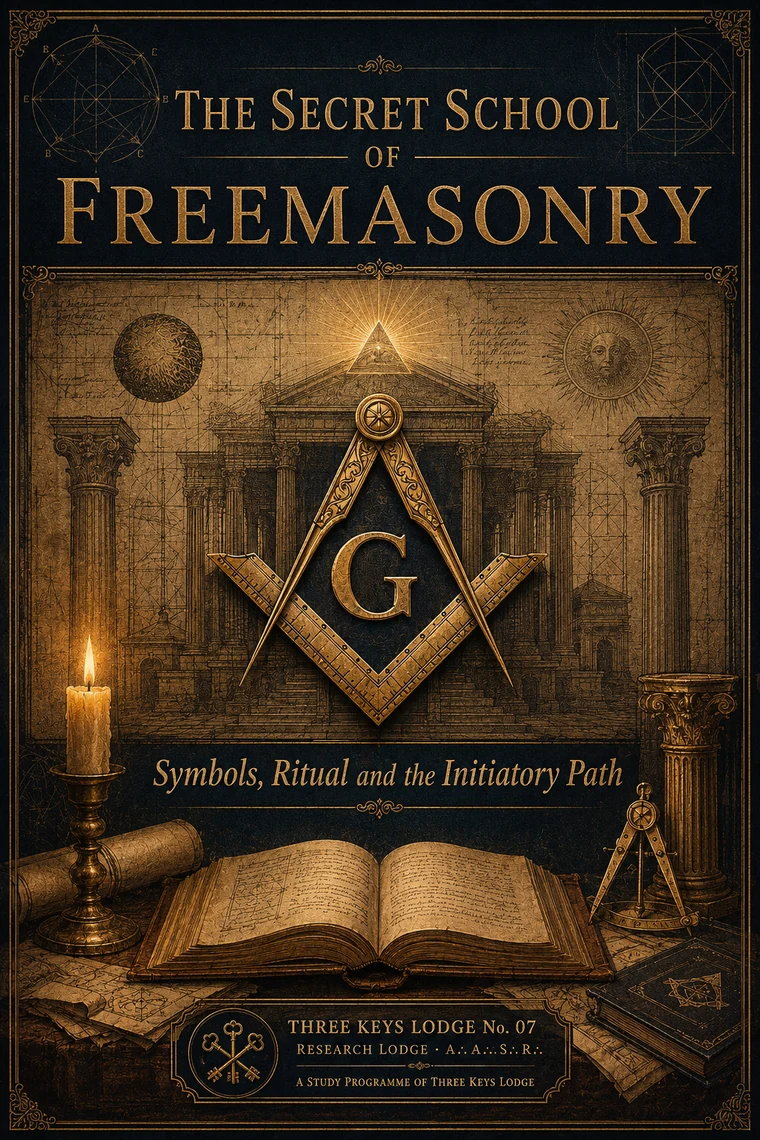
Freemasonry is easy to encounter and much harder to understand. Its symbols appear in books, films and popular culture; its history is widely discussed; fragments of ritual are publicly available.
The difficulty is context. A symbol, phrase or ceremony tells us little when separated from the system in which it belongs.
This programme therefore studies relationships: between history and ritual, symbol and architecture, moral teaching and initiatory practice.
The programme avoids both sensationalism and romanticism. Historical claims are treated as historical claims; later interpretations are identified as such; symbolic readings are considered in the context in which they developed.
Sources, chronology and the development of the Craft.
Tools, images, architecture, geometry, stone, light and the Temple in context.
Sequence, movement, silence, memory and the setting in which meaning is carried.
How themes of formation, responsibility and continued work develop across the tradition.
Working tools, stone, light, geometry, the Temple and ritual space are not treated as separate curiosities. Their meaning becomes clearer when they are studied together.
The central question is therefore not simply what a symbol means, but what role it plays within a larger Masonic structure.
Between Myth, Symbol and Reality
The Birth of a Brotherhood
The Search for Light
How Freemasonry Speaks Through Images
The Path of Inner Awakening
The Temple as a Symbolic Universe
The Hidden Mathematics of the Universe
The Discipline of Character
Brotherhood, Reason and the Making of the Modern World
Why Secret Brotherhoods Frighten Society
An Ancient Tradition in the Age of Algorithms
What Freemasonry Ultimately Seeks to Teach
The course places familiar Masonic ideas back into context.
An image of work, formation and development.
Knowledge and understanding.
An image of order.
Measure and proportion.
A moral language.
Meaning expressed through action and sequence.
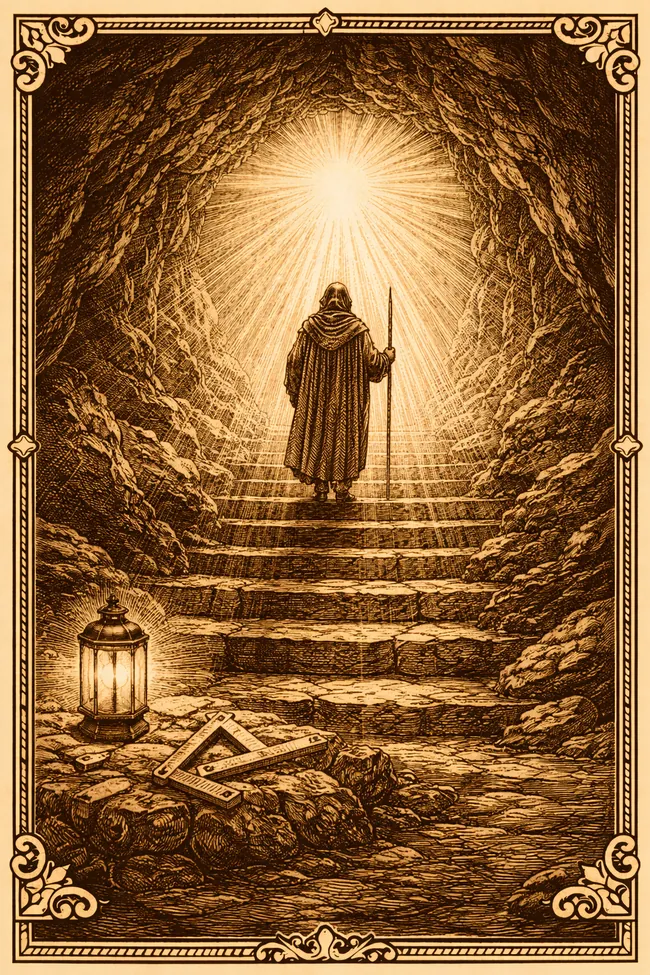
Freemasonry can be studied publicly. Initiation belongs to the life of the Lodge.
The programme can explain history, compare ritual forms and examine symbolic ideas, but it does not attempt to reproduce Masonic initiation.
Study may clarify the structure of the tradition; it cannot replace participation in it.
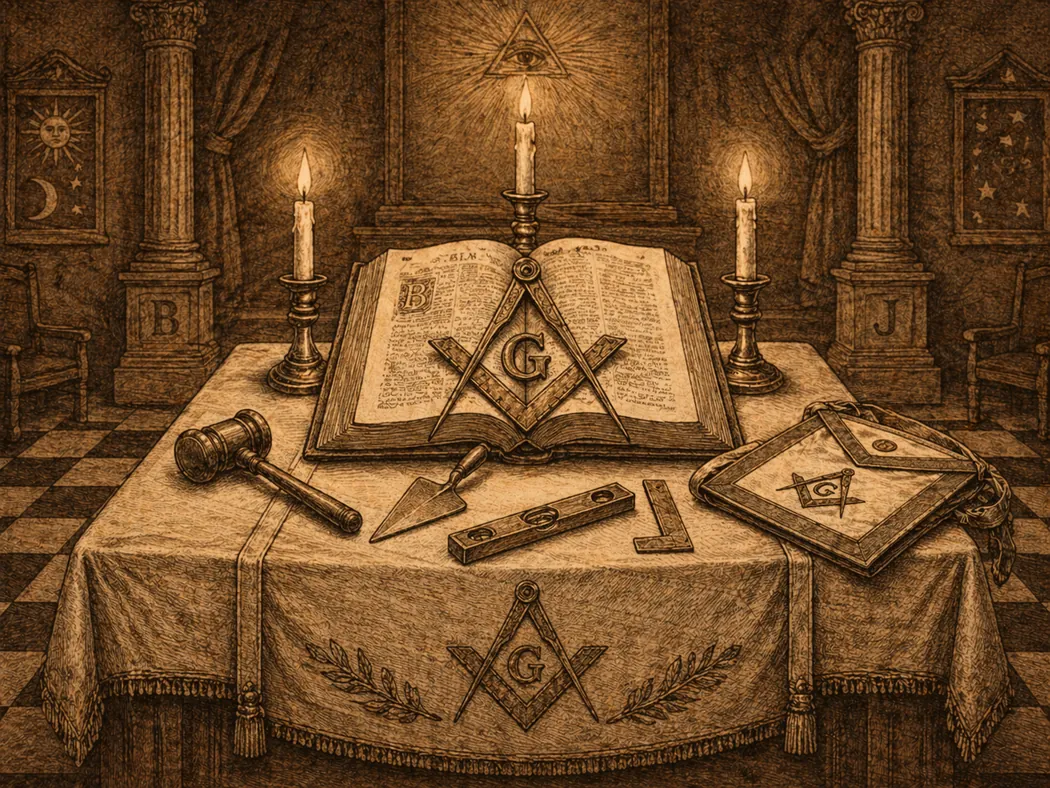
Two original visual references accompany the twelve modules.
The previews below are reduced. Complete versions are available inside the private Student Library.
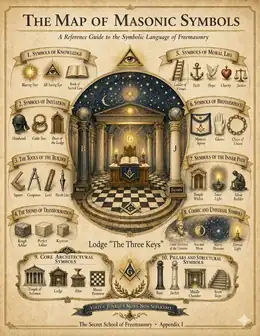
The first atlas brings the principal symbols into a single organised view and shows the families and relationships to which they belong.
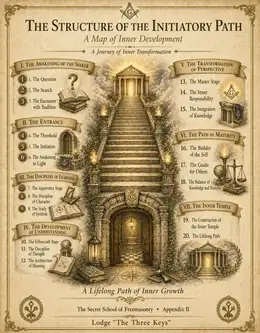
The second atlas presents a seven-stage analytical model of development. It is a study aid rather than a doctrine: a way of seeing how recurring themes of preparation, transition, reflection and continued work relate to one another.
Enrolled students receive personal access to a private digital library containing the twelve modules, both reference atlases and a glossary.
The material remains available as a reference library, so the programme can be revisited rather than simply completed once.
Professional Masonic Programme
The programme is intended for readers who value careful study: Freemasons wishing to revisit familiar material from a research perspective, and non-Masons interested in the history, philosophy, ritual and symbolism of the Craft.
No specialist knowledge is required. Curiosity, patience and a willingness to distinguish evidence from interpretation are more important.
The Professional Masonic Programme is developed by Three Keys Lodge No. 07 and reflects the Lodge’s research approach.
Its purpose is to make serious study available beyond the Lodge while preserving a simple distinction: learning about an initiatory tradition is not the same as being initiated into it.
The twelve modules move from history and myth through symbolism, ritual, architecture, morality and the modern world, ending with the question that runs through the programme: what kind of work does Freemasonry ask of the individual?
Programme access is arranged personally by Three Keys Lodge.
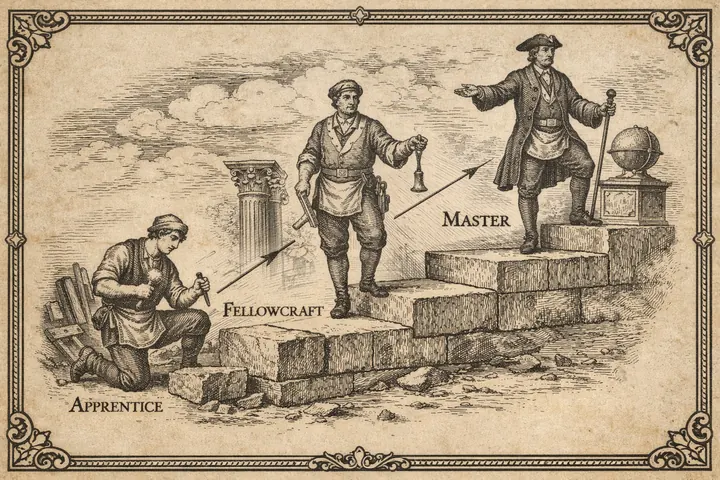
Professional Masonic Programme
Symbols · Ritual · Initiatory Path